Welcome to the project "AIDS Campaigning between the Global South and Western Europe since the 1980s", and the "Multidirectionality" network!
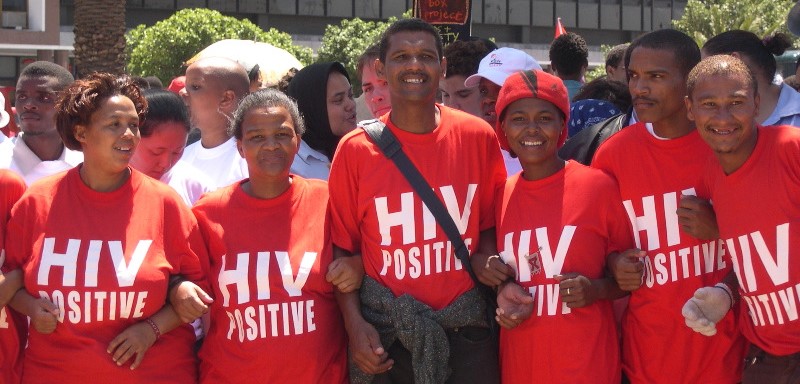
Very often, research on HIV activism tells the same story: campaigns in large urban centres in North America and Western Europe, and how ideas from those locations spread to other parts of the world. The project on the global history of HIV and AIDS activism is telling a different story: it takes a “decentring perspective”, examining the unexplored importance of HIV campaigns conducted in the Global South since the 1980s, for relevant activism in Western Europe. It explores key hubs of HIV activism in locations in India, Turkey, South Africa, Argentina, Spain, the UK and the Federal Republic of Germany. It also helps diversify the focus of initial research on HIV activism on white gay cisgender men, by considering in depth the ideas and activities of HIV activists who fall into one or more of the following groups: people of colour, sex workers, gender-non-conforming, women, Dalit, and/or disabled. This project involves an interdisciplinary team of 5 people: Nikolaos Papadogiannis, Moises Fernandez-Cano, Koonal Duggal, Mbali Pewa and Merve Alcayir. Each team members specialises in one or more of the following disciplines: history, anthropology, geography, and media studies.
This is a mission-based project, working closely with community partners to create more inclusive and relatable HIV campaigns and help achieve the goal of international organisations, like UNAIDS, to end HIV transmission by 2030, but also to attend to the needs of people living with HIV. Moreover, the project isn’t just studying global connections, it’s also building them. Working with over twenty partner organisations across the world, the project has been creating networks of researchers working on queer studies in Scotland, Argentina, Spain, and India; co-producing a documentary with community partners in South Africa; and also contributing to archival collections in South Africa and Europe.
The project team has co-established the “Multidirectionality” research network at the University of Stirling. This network explores flows of ideas, symbols and practices among HIV activists in different regions of the world, and from varying social backgrounds, but always centring on their lived experiences. Alongside the above-mentioned project team of five people, “Multidirectionality” includes Giulia Sbaffi, a Leverhulme Trust Early Career Fellow leading the project ‘Fighting HIV Through Intersectionality: Queer and Trans Activism in 1980s Italy‘; and Lesego Nzuza, a PhD student working on the history of Black prison nurses and HIV activism in South Africa, funded by the University of Stirling and the German History Society, and supervised by Nikolaos Papadogiannis and Holger Nehring.